Our vision, mission and values
The Junior Academy is the international benchmark in the field of alternative schools. A school open to diversity and which promotes the learning of foreign languages from an early age. It is a warm place, a continuation of the family cocoon where it is good to learn at your own pace. And where every adult listens to the child's needs.
The school offer respects the national education program and is based on the philosophy of Maria Montessori in order to promote self-esteem, independence, empathy and social awareness
Our mission
Awaken children's curiosity, help them grow and flourish every day in contact with educators. Discover a language, a culture and make children actors in a better world!
Our values
Listening to ... the needs of each child
Encourage ... exploration, free choice and effort
Develop ... curiosity and self-confidence
The pillars of the pedagogy implemented in our school
Montessori pedagogy in practice
A pedagogy that promotes the natural development of the child by allowing him to progress at his own pace.
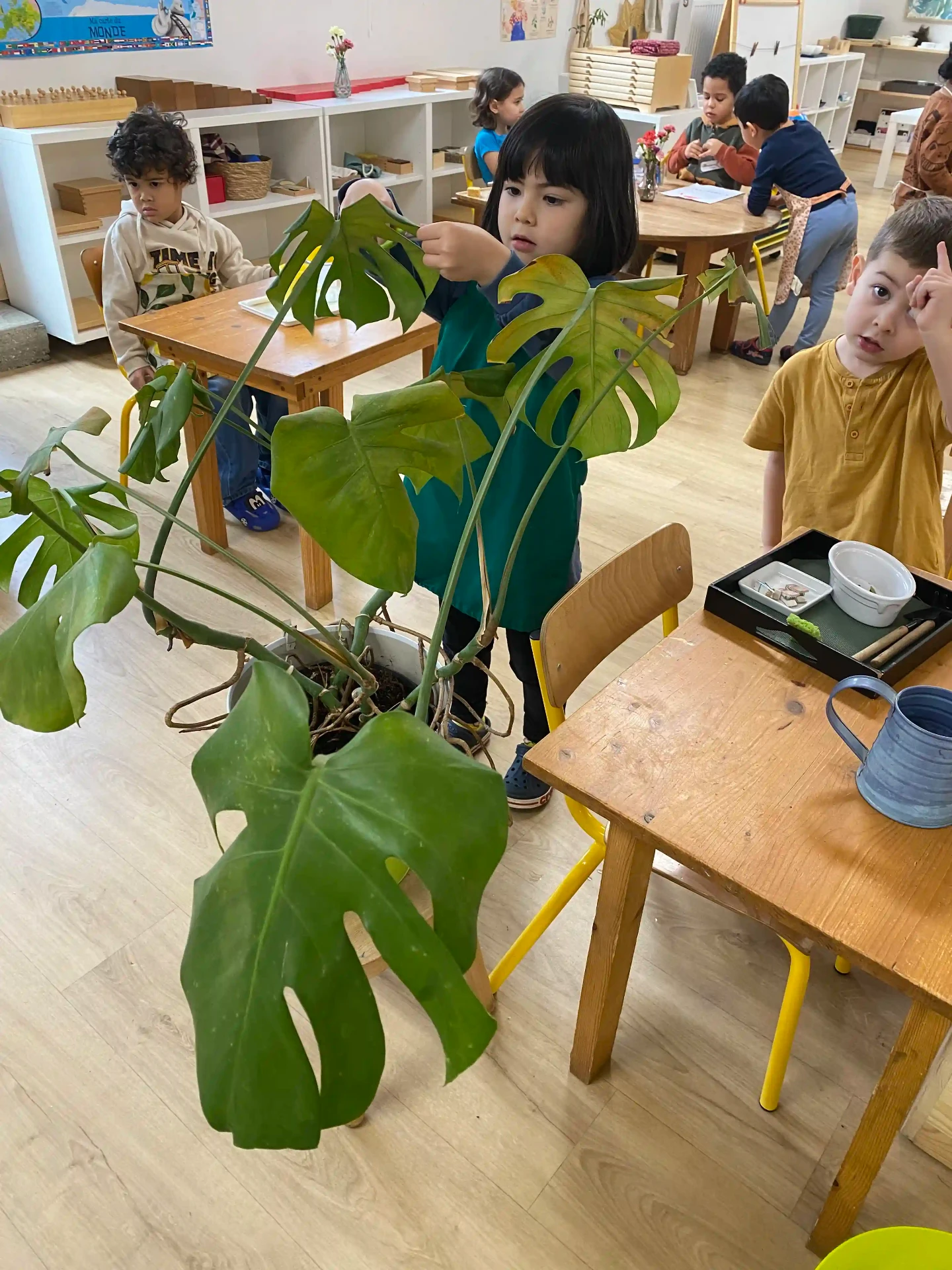
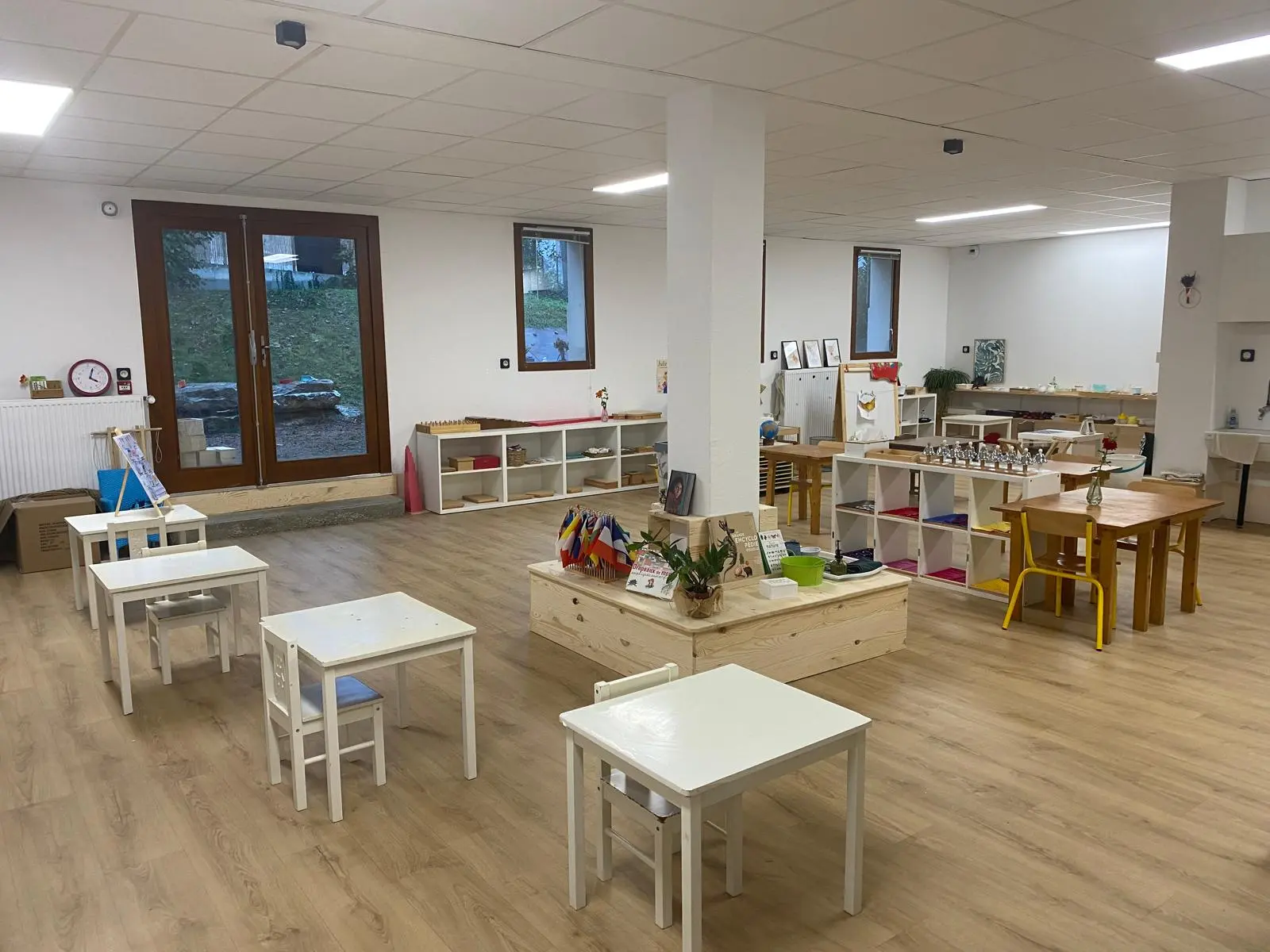
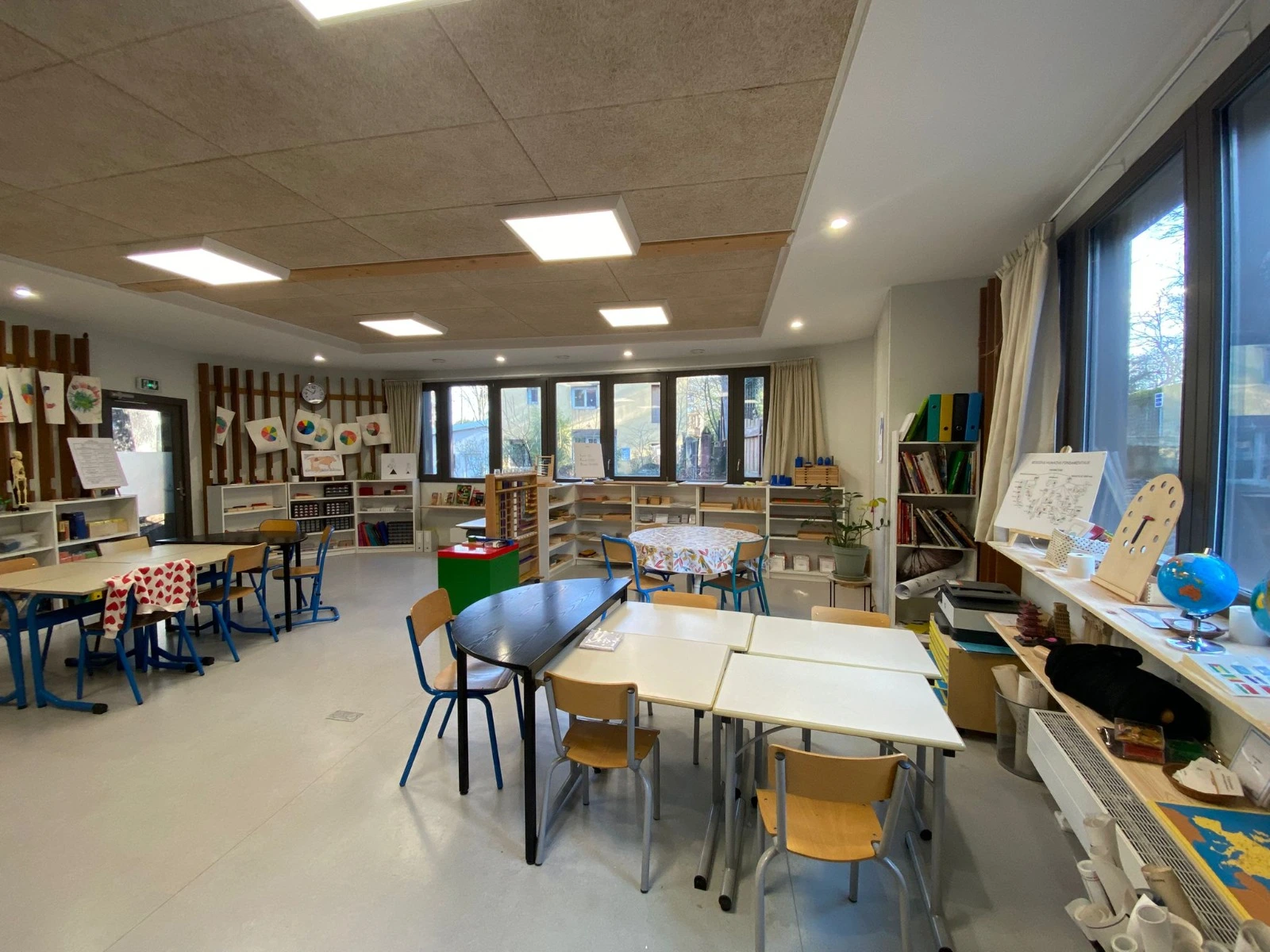
The class prepared for children aged 3 to 6 is called the “Children's House”. The environment is designed for the child. Children are welcomed in a group of 26 maximum supervised by an educator and an assistant trained in Montessorian pedagogy
The objectives of the "Children's House"
- Refine movement and sensory perceptions
- Develop logical, mathematical thinking
- Prepare for writing and reading
- Develop intelligence and the ability to adapt through the appropriation of concepts
- Build self-confidence and self-esteem
The characteristics of the "Children's House"
- The class, called "ambiance" is multi-age, bringing together children from 3 to 6 years old. The environment is thus conducive to exchanges, experiences and mutual aid.
- The matériel pédagogique is complete: it supports the development of the child and is self-correcting: it allows immediate error control. Developing concentration, through the use of the materials, will help children control their emotions and distractions and stay focused on their work.
- The Meeting times sont prévus quotidiennement : comptines, lectures, musique, saynètes de courtoisie etc
- The presentations of the material and the educational follow-up are individualThe progression is clear and respects the national education program
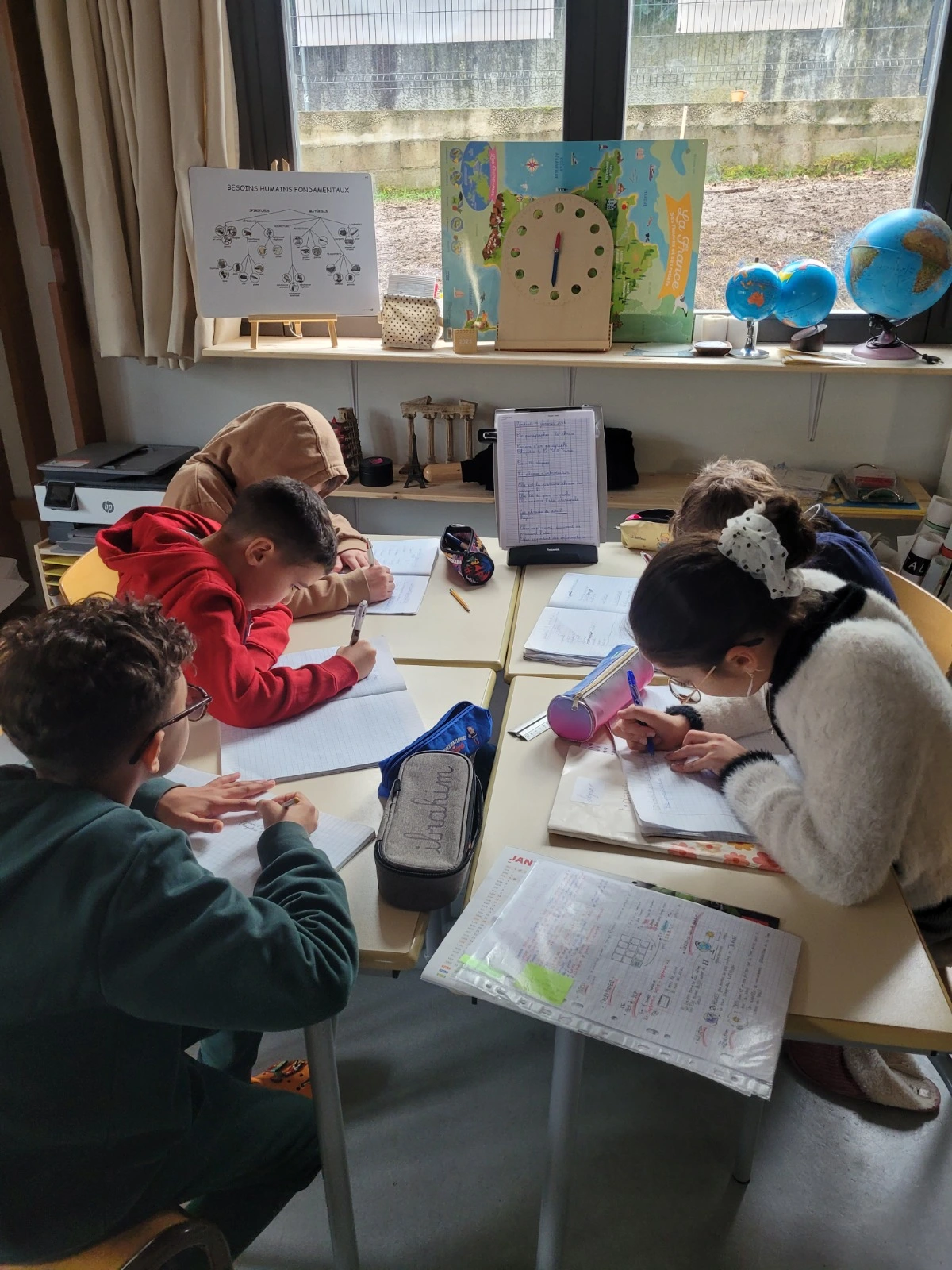
La classe 6–12 ans, appelée « Communauté des explorateurs »
-
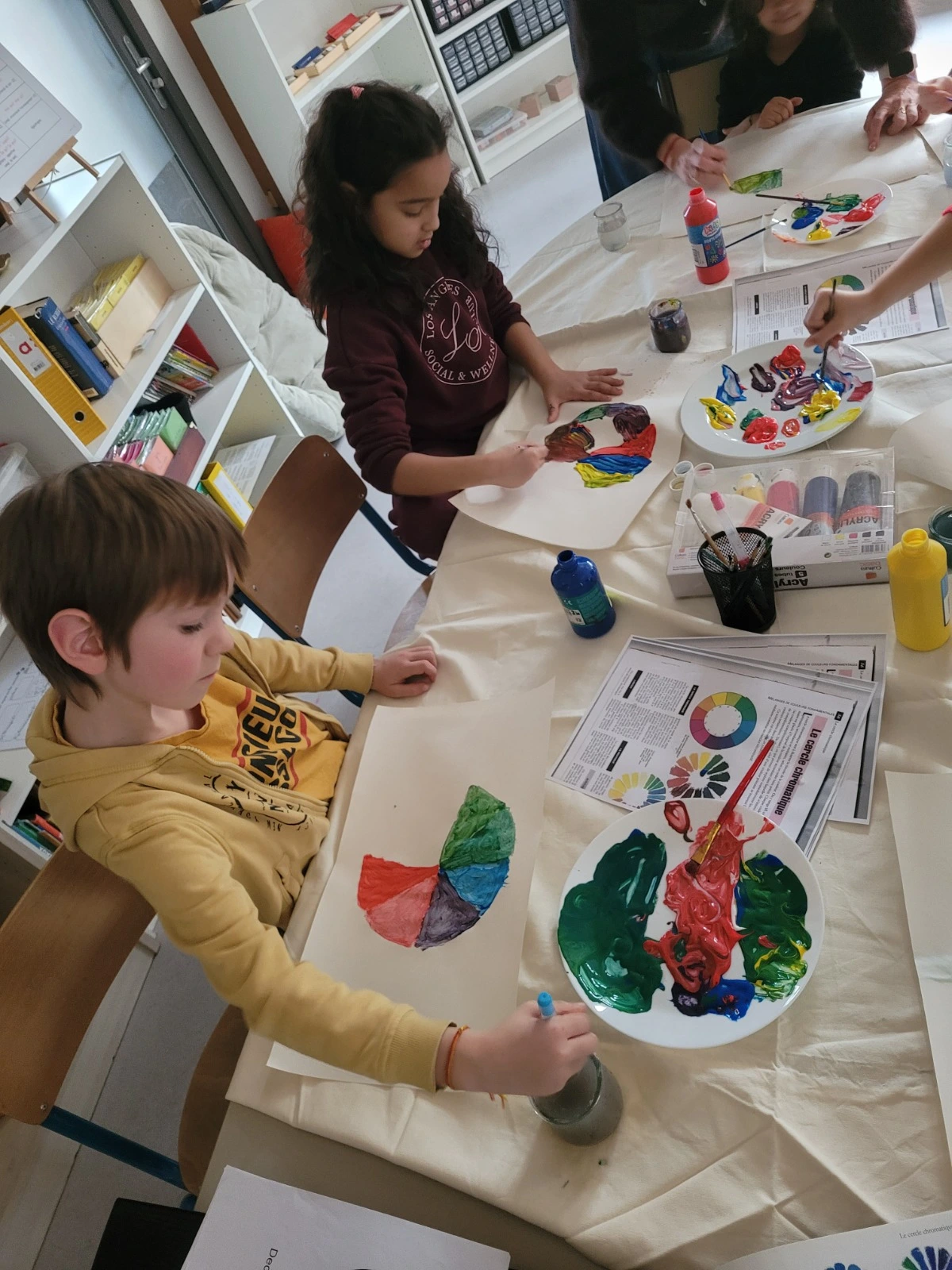
L’environnement favorise l’autonomie, la coopération et l’approfondissement des connaissances à travers des projets interdisciplinaires et une pédagogie active.
Autonomie, exigence et immersion quotidienne en anglais
Notre classe élémentaire Montessori accueille les enfants de 6 à 12 ans dans un environnement bilingue structuré, exigeant et profondément respectueux de leur développement.
À cet âge, l’enfant devient un esprit raisonnant : il cherche à comprendre le monde, à relier les connaissances, à développer son sens moral et sa pensée critique.
Notre pédagogie Montessori repose sur :
-
un plan de travail individualisé,
-
une progression du concret vers l’abstraction,
-
une approche interdisciplinaire,
-
une classe multi-âges favorisant l’entraide et la responsabilité.
Le programme de l’Éducation nationale est pleinement respecté.
Dans notre école, l’anglais n’est pas « enseigné » : il est vécu chaque jour.
Notre assistante anglophone accompagne les élèves dans les différentes matières et les moments de vie de classe.
Cette immersion naturelle permet :
-
un enrichissement progressif du vocabulaire,
-
l’acquisition de structures de phrases correctes,
-
une aisance orale authentique.
Les élèves les plus à l’aise accèdent progressivement à la lecture en anglais, découvrant ainsi le plaisir de la littérature anglophone.
Former des enfants prêts pour l’avenir
Nous accompagnons les enfants pour qu’ils deviennent :
-
autonomes,
-
responsables,
-
curieux,
-
capables de coopération et d’adaptation.
L’école Montessori 6–12 ne prépare pas seulement à la réussite scolaire : elle prépare à la vie.
Bilingualism
Openness to the world is essential these days. In order to best prepare the adults of tomorrow, offering the learning of English as a second language seems essential to the development of each child. Montessori pedagogy is an international pedagogy, recognized in the world.
Our teaching method is immersive with an English-speaking educator to learn English in a natural and effortless way.
***
Furthermore, did you know that learning a second language from an early age promotes the development of executive functions?
About Maria Montessori
Maria Montessori (1870-1952), Italian physician, was one of the first pedagogues to conceive of a science of education.
She develops her pedagogy throughout her life, evolving according to her training, travels, encounters, but above all her observations of children and her understanding.
Elle travaille autour de la construction du rythme de la vie humaine, selon quatre plans de développement:
- Early childhood from 0 to 6 years
- Childhood from 6 to 12 years old
- The teenager from 12 to 18 years old
- The maturity of 18 to 24 years
For Maria Montessori, l’éducation doit être mise en œuvre comme «une aide à la vie». Elle soutient le développement de l’enfant afin qu’il révèle son «potentiel humain». For her, the education of a child determines the adult he will be tomorrow and this education can only be provided by an adult who knows the development of the child.